Care After Implant

Guidance to help your implant heal properly and function long-term

Caring for Your Implant and Implant-Supported Dentures

Dental implants and implant-supported dentures are designed to restore function, comfort, and confidence—but proper daily care is essential to protect your investment and maintain long-term oral health. Whether you have fixed All-on-4 dentures or removable Snap-On dentures, a consistent cleaning routine helps keep your implants, gums, and restorations healthy.
The information below is intended to guide you in caring for your implant-supported dentures and to support the longevity and comfort of your smile.

Care After Implant Surgery

Following implant placement surgery, your body needs time to heal and integrate the implant with the jawbone. Healing times vary, and your dentist will guide you on when the implant is ready for restoration.

Diet

  • Eat soft foods during early healing.
  • Avoid hard, crunchy, or sticky foods until cleared by your dentist.
Immediately After Surgery
  • Mild swelling, tenderness, or soreness is normal.
  • Take prescribed or recommended medications as directed.
  • Avoid touching or disturbing the surgical area.
  • Do not smoke, vape, or use straws during the healing period, as this can interfere with healing.

Oral Hygiene During Healing

  • Continue brushing your other teeth gently.
  • Avoid brushing directly over the surgical site
  • Rinse gently with a prescribed or recommended rinse if advised by your dentist.
  • After the initial healing period, you may gradually resume gentle cleaning around the implant site.

Caring for a Single Implant-Supported Crown

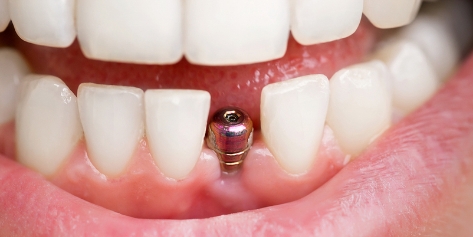
A single implant crown replaces one missing tooth and is cared for much like a natural tooth.

Daily Care

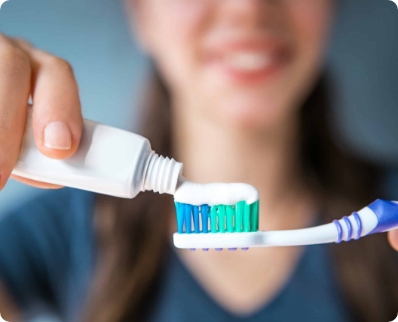
  • Brush twice daily using a soft-bristled toothbrush and non-abrasive toothpaste.
  • Clean along the gumline where the crown meets the gums.
  • Floss daily around the implant crown using floss, floss threaders, or interdental brushes.

Additional Tips

  • A water flosser can help remove debris around the implant.
  • Avoid biting very hard objects (ice, pens, hard candies)

Professional Care

  • Attend regular dental visits so your dentist can monitor the implant and the surrounding gums.

Caring for Dental Implant-Supported Bridges

Implant-supported bridges replace multiple missing teeth, supported by implants rather than natural teeth.

Daily Care

  • Brush all surfaces of the bridge carefully, paying special attention to the gumline.
  • Clean underneath the bridge using floss threaders, interdental brushes, or a water flosser.
  • Rinse with a non-alcohol antimicrobial mouthwash if recommended.
Why This Matters
  • Food and plaque can collect beneath bridges. Proper cleaning helps protect the implants and surrounding gum tissue.

Professional Care

  • Attend regular dental visits so your dentist can monitor the implant and the surrounding gums.

Caring for Implant-Supported Dentures

Implant-supported dentures may be fixed (All-on-4 / All-on-6) or removable
(Snap-On dentures). Each requires a slightly different routine.
Implant-supported dentures may be fixed (All-on-4 / All-on-6) or removable (Snap-On dentures). Each requires a slightly different routine.

Fixed Implant Dentures (All-on-4 / All-on-6)

These dentures are secured in place and are not removed at home.
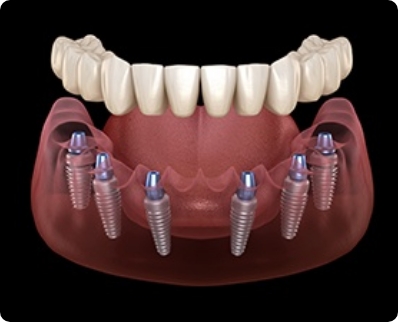
Daily Care

  • Brush twice daily with a soft toothbrush and non-abrasive toothpaste.
  • Clean along the gumline and around the implant-supported denture.
  • Use floss threaders, interdental brushes, or a water flosser to clean beneath the prosthesis.
  • Rinse with a non-alcohol antimicrobial mouthwash if recommended.

Professional Care

  • Regular professional cleanings are essential to maintain implant health and assess the prosthesis.

Removable Implant-Supported Dentures (Snap-On Dentures)

Snap-On dentures are designed to be removed for cleaning.
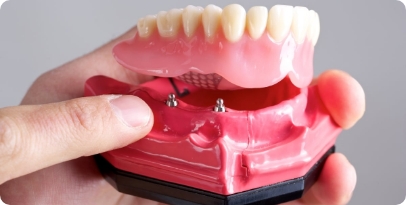
Soaking

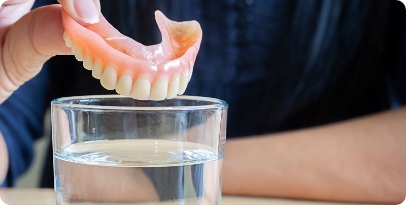
  • Soak dentures daily in a denture-cleaning solution as directed.
  • Avoid hot water or abrasive cleaners.

Daily Care

  • Remove dentures daily for cleaning.
  • Brush the dentures gently with a soft toothbrush and denture cleanser.
  • Clean the snaps or attachments carefully.

Oral and Implant Care

  • Brush and clean around the implant attachments in your mouth using a soft or interdental brush.
  • Rinse your mouth after meals.

Helpful Tips and Articles

BLOG

Your Guide to a Healthier Smile – in Simple and Easy steps

BLOG

The Importance of Regular Dental Checkups

BLOG

Common Dental Myths — What’s True and What’s Not

Why Ongoing Care Is Important

Consistent oral hygiene helps:
  • Maintain healthy gums
  • Protect implant stability
  • Reduce plaque buildup and inflammation
  • Extend the life of your restoration
Dental implants require the same attention as natural teeth —sometimes more.

When to Contact Our Office

Please contact us if you experience:
  • Persistent discomfort or swelling
  • Loosening of an implant or restoration
  • Changes in bite or fit
  • Difficulty cleaning around implants
Denture treatment is provided on a case-by-case basis following careful clinical evaluation.

Request An Appointment

Fill out the form below, and we’ll contact you shortly. 

McKinleyville Office​

1737 Central Avenue, McKinleyville,
CA 95519
Phone: (707) 839-3262
Fax: (707) 839-3275
Email: infomck@northcoastdentists.com

Office hours: Mon – Sat, 8 AM – 5 PM,
Sunday closed

Frequently Asked Questions

Yes, we accept many dental insurance plans. Our team can help you understand your benefits and estimate your out of pocket costs before treatment.

We begin with a detailed exam and take time to understand your concerns, goals, and oral health needs. Then we explain your options clearly so you can feel confident about your care.
We do our best to accommodate same day appointments whenever possible, especially for urgent dental concerns. Please call our Eureka or McKinleyville office to check availability.
Your first visit usually includes a comprehensive exam, digital X rays if needed, and a conversation about your dental history and goals. We will make sure you feel informed and comfortable throughout.
Root canal therapy is designed to relieve pain, not cause it. With modern techniques and local anesthesia, most patients find the procedure much more comfortable than expected.
A dental crown may be recommended when a tooth is weakened, cracked, heavily filled, or restored after a root canal. It helps protect the tooth while restoring its strength and appearance.
Dental implants are a reliable, long term option for replacing missing teeth. We will evaluate your oral health, bone support, and goals to see if implants are the right fit for you.